Discovery
25 Days of Christmas Sudoku
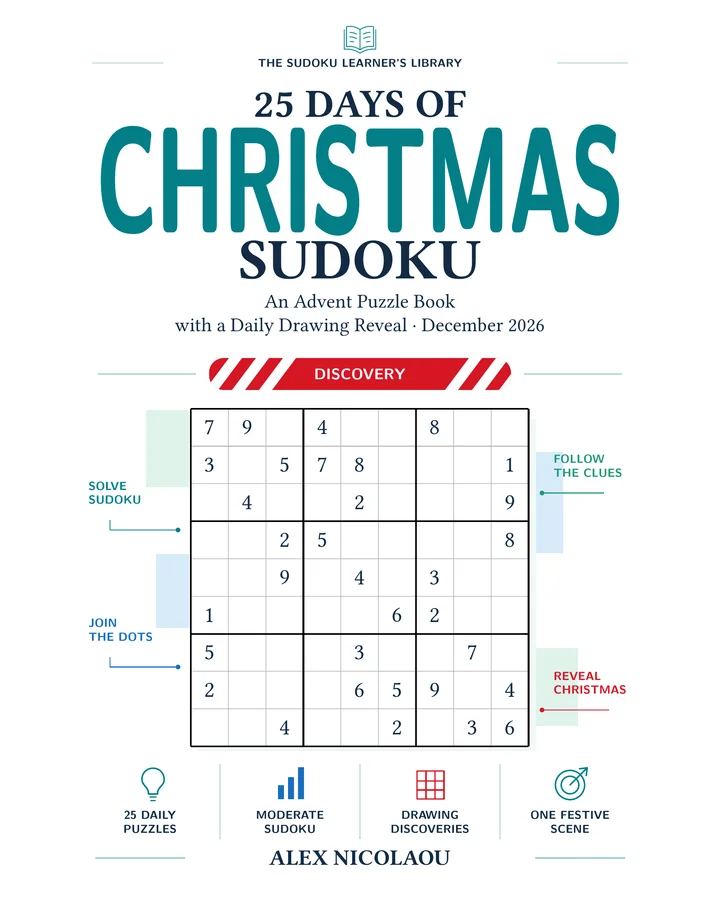
A Sudoku Advent calendar for December 2026. Solve one moderate puzzle each day from December 1 to Christmas Day, then use your answers to reveal another part of a festive drawing.
Available now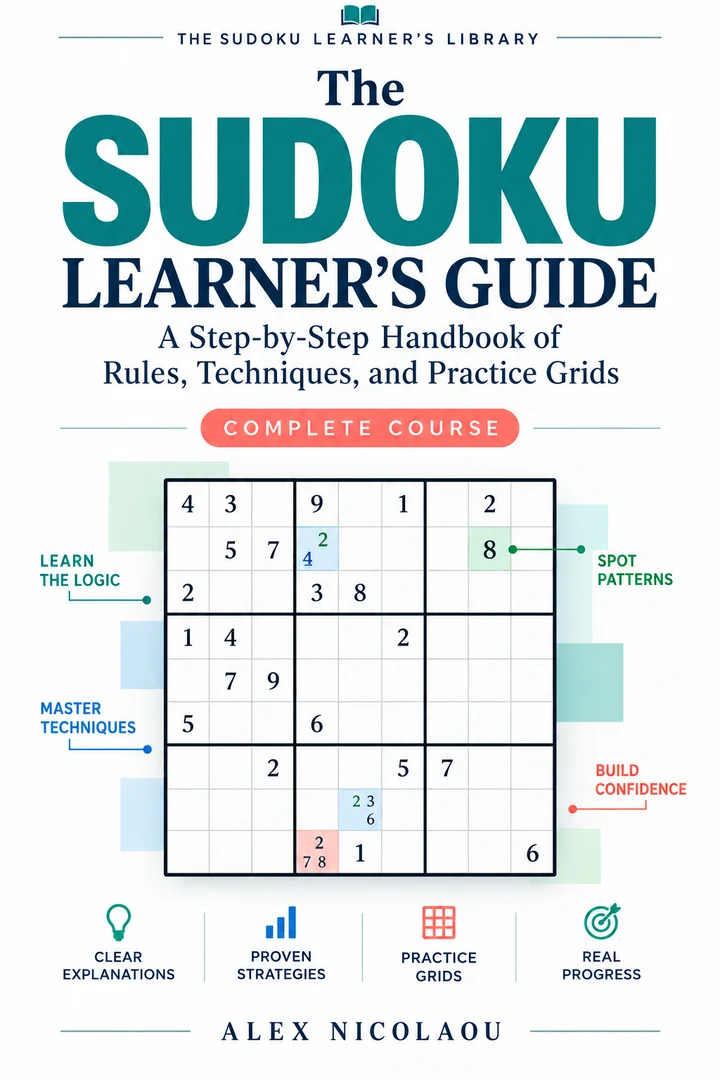
The Sudoku Learner's Library
Available nowA Step-by-Step Handbook of Rules, Techniques, and Practice Grids
A complete course in seeing the logic. Learn the rules, understand the techniques, and build your confidence one well-explained step at a time.
Learning Sudoku from the beginning, or understanding the techniques behind your next breakthrough.
Choose your Amazon marketplace.
As an Amazon Associate I earn from qualifying purchases.
Understanding, step by step
A full-colour, 6 x 9 inch course with 45 complete puzzles, visual explanations, and walkthroughs that build from the first rules to advanced patterns and chains.
The book's QR codes open the exact puzzle in our online Sudoku solver. Enter digits and candidate notes, ask for a hint, or follow a walkthrough. Find the solver any time at annasdadpress.com/next.
Full Houses; Naked and Hidden Singles; Naked and Hidden Pairs; Pointing Pairs; Y-Wing; X-Wing; Swordfish; Naked Triples; Simple Colors; XY-Chains; Unique Rectangles; and 3D Medusa.
A look inside
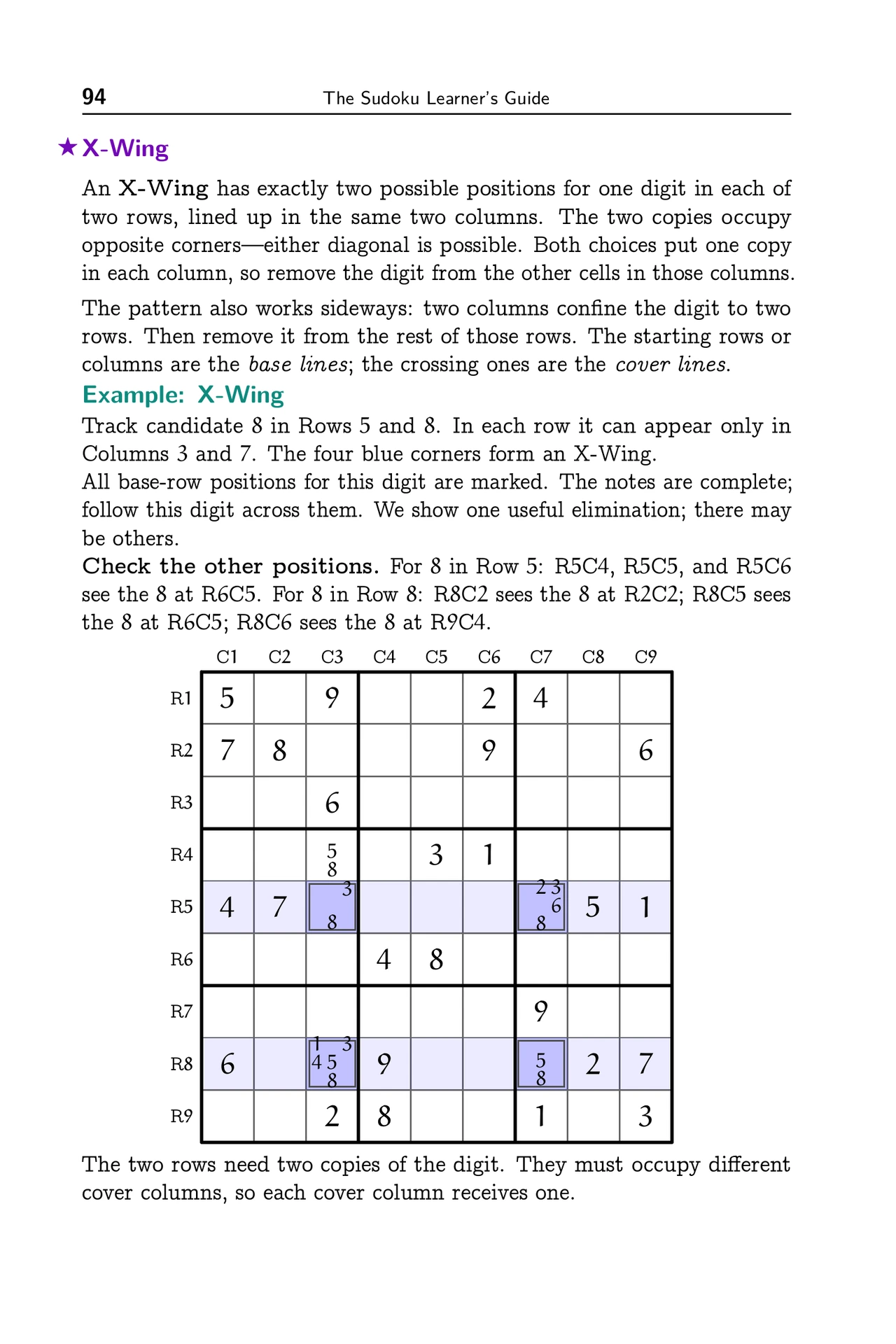
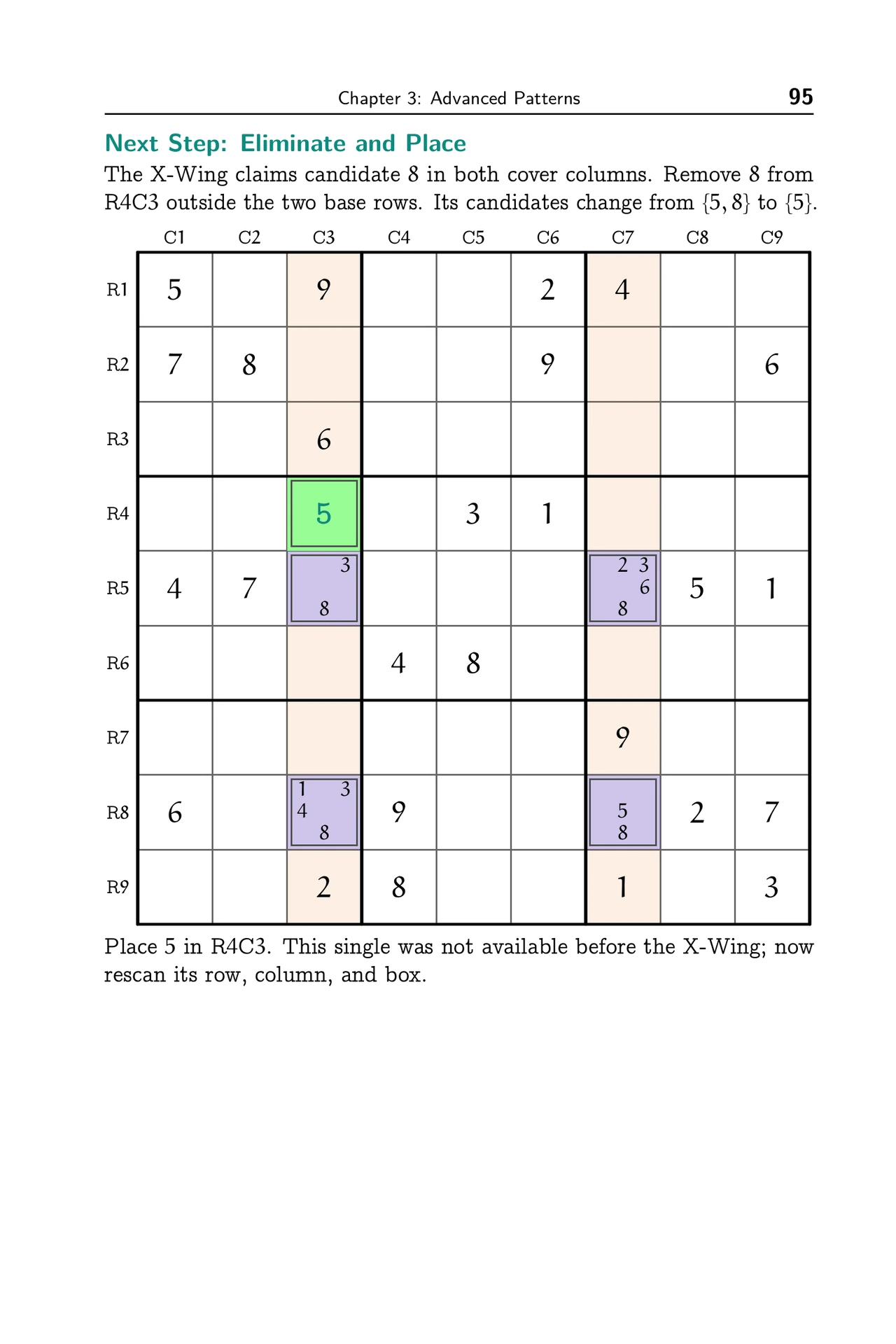
An X-Wing example and its next deduction, taken from the current print edition.
The first page identifies an X-Wing: two rows restrict the same candidate to the same two columns. Those columns must receive that digit from the pattern.
The second page follows an elimination outside the pattern and the single it reveals. The diagrams retain candidate notes so you can follow the deduction.
A Sudoku Advent calendar for December 2026. Solve one moderate puzzle each day from December 1 to Christmas Day, then use your answers to reveal another part of a festive drawing.
Available now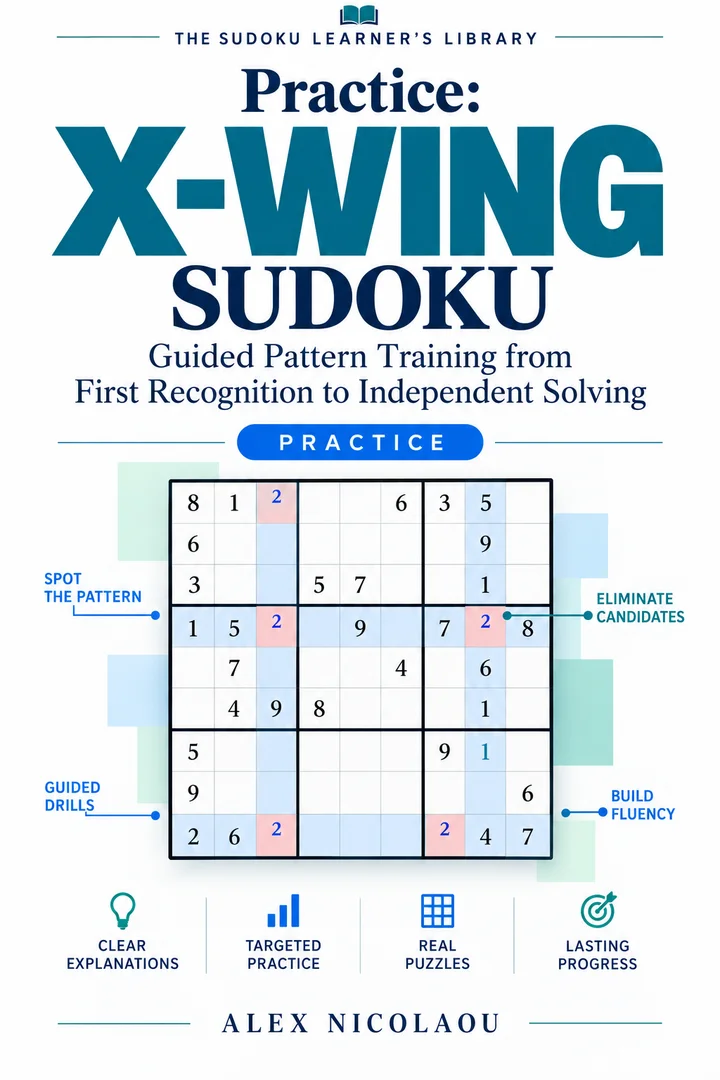
Learn to spot X-Wing patterns through progressive, deliberate practice. Turn a technique you understand into one you can recognise.
Available now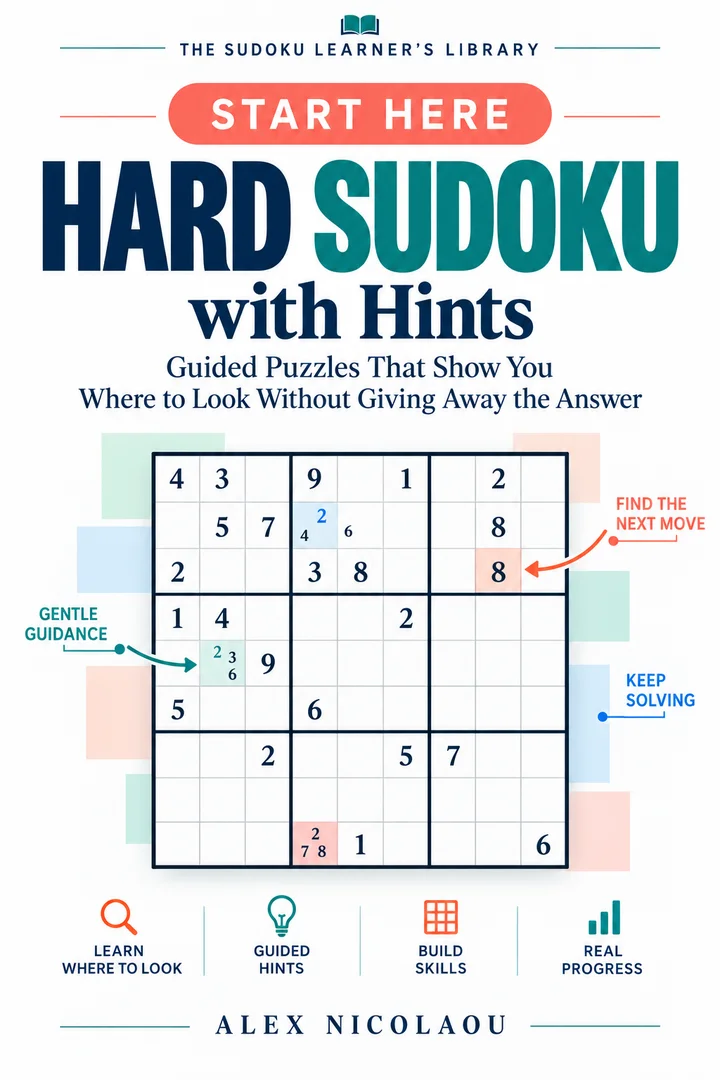
Take on hard Sudoku with a little direction when you need it. Hints point you towards your next move while leaving the discovery to you.
Available now